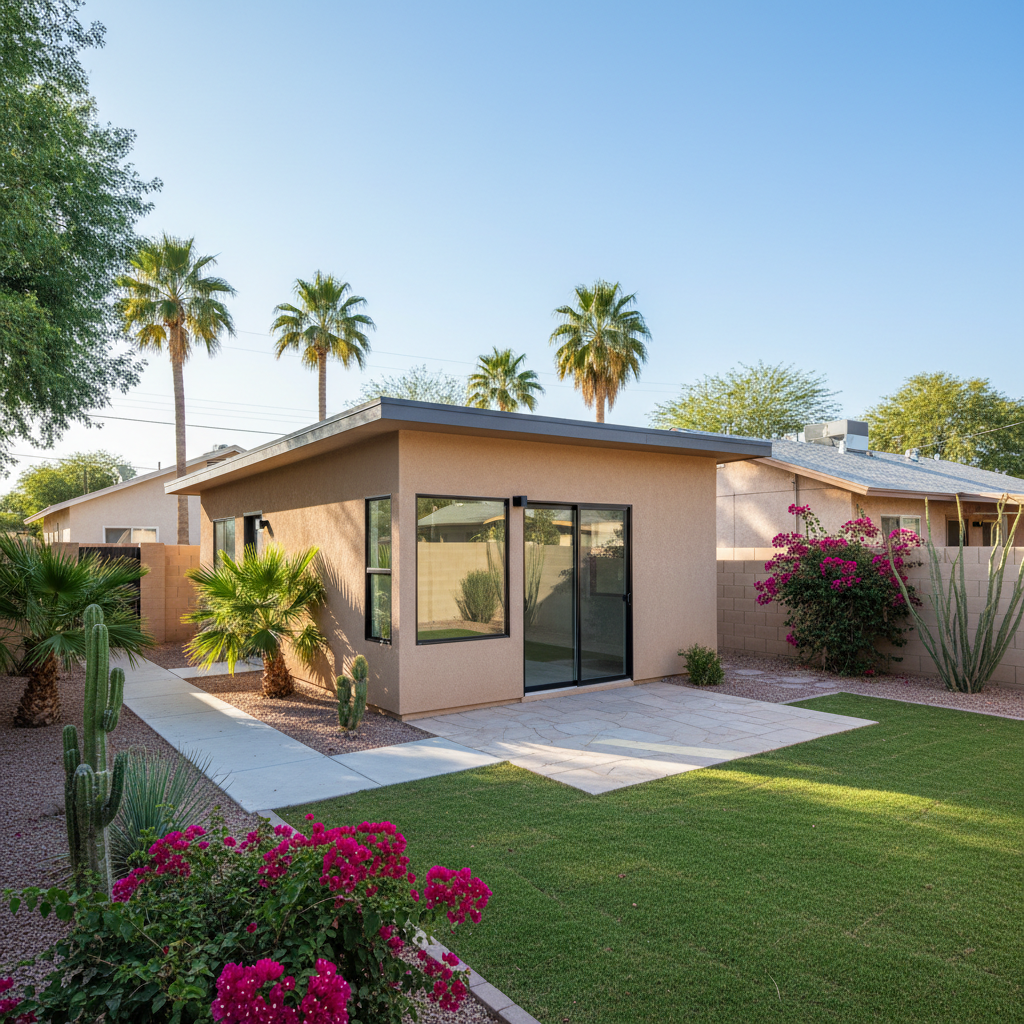
ADU Financing in Phoenix: What Your Backyard Home Will Really Cost
So, you're thinking about adding an ADU, maybe a casita or a granny flat, to your place right here in Phoenix. Smart move, honestly. It's great for extra income, more space for family, or just bumping up your property value. But let's be real: the first thing everyone asks is, "How much is this actually going to cost me?" And even more important, "How am I going to pay for it?"
Forget those vague estimates you might have heard. I'm going to break down what really drives ADU costs in our unique desert environment. Plus, I'll show you how to approach financing without getting burned.
What Makes ADU Costs Go Up or Down?
There's no single price for an ADU. Think about it like buying a car — the cost depends entirely on the model, the features, and whether you want a basic sedan or a luxury SUV. For ADUs, these are the big factors:
- Size and Type: A small, detached studio ADU, say around 400 sq ft, will definitely cost less than a two-bedroom, two-story unit that's 800+ sq ft. Converting an existing garage is usually cheaper than building from scratch, mainly because you're reusing the foundation and some walls.
- Finishes and Features: Here's where you really control the budget. Are you looking for builder-grade cabinets and laminate flooring, or are you dreaming of high-end quartz countertops and custom tile showers? Energy-efficient windows and appliances cost more upfront, sure, but they'll save you money long-term, especially with our brutal Phoenix summers.
- Site Work and Utilities: This is often the biggest variable, and sometimes, the biggest surprise cost. If your sewer line is on the complete opposite side of your property from where you want the ADU, trenching across your entire yard to connect it can add thousands. Same deal for electrical and water hookups. And if your current electrical panel can't handle the extra load, you'll need an upgrade. We see this a lot in older neighborhoods, places like Arcadia or Central Phoenix, where the infrastructure might be a little dated.
- Permits and Fees: Maricopa County and the City of Phoenix each have their own permit processes and fees. These aren't negotiable, and they can easily add several thousand dollars to your project. Don't even think about trying to skip them — it'll cost you way more down the road.
- Design and Engineering: You'll need architectural plans and structural engineering. This isn't just bureaucracy; it makes sure your ADU is safe, up to code, and built to stand up to our expansive soils and those occasional monsoon winds.
Typical Cost Ranges in Phoenix, AZ
Alright, let's get some actual numbers on the table. These are rough estimates, based on what I've seen with Phoenix ADU Solutions, Inc. projects, but they should give you a good starting point:
- Basic Garage Conversion (200-400 sq ft): If your garage is already in decent shape, you might be looking at $60,000 to $120,000. This generally covers insulation, drywall, basic plumbing/electrical, a mini-split AC, and standard finishes.
- Small Detached Studio/1-Bedroom ADU (400-600 sq ft): For a new build, from the ground up, expect $120,000 to $200,000+. This range includes the foundation, framing, roofing, utility trenching, and standard to mid-range finishes.
- Larger Detached 1-2 Bedroom ADU (600-800+ sq ft): These can easily run from $200,000 to $350,000 or more. Especially if you're going with higher-end finishes or if you have some complex site conditions to deal with.
Just remember, these are construction costs. They don't always include things like landscaping, fencing, or other exterior improvements you might want around your new ADU.
What's Included in a Comprehensive Quote?
When you get a quote from a reputable contractor, it should be pretty detailed. Here's what you'll want to see:
- Permit Fees: Clearly itemized, or at least included in the total.
- Architectural & Engineering Plans: The cost for designing your ADU.
- Site Preparation: Grading, utility trenching (water, sewer, electric, gas if applicable).
- Foundation: Concrete slab, footings.
- Framing: Walls, roof structure.
- Exterior Finishes: Stucco, roofing, windows, doors.
- Interior Finishes: Insulation, drywall, paint, flooring, cabinets, countertops, light fixtures, plumbing fixtures.
- HVAC: Mini-split systems are common for ADUs, or a small central unit.
- Plumbing: All pipes, water heater, connections.
- Electrical: Wiring, outlets, switches, panel upgrades if needed.
- Cleanup and Debris Removal: You definitely don't want a construction mess lingering.
A good contractor will walk you through each line item and explain exactly what you're getting. If a quote is just one big number, be wary.
How to Finance Your ADU Project
Okay, you know the costs. Now, how do you pay for it all? Most folks aren't sitting on hundreds of thousands in cash, right? Here are the common routes:
- Home Equity Loan or HELOC: If you've got equity in your primary home, this is often the easiest and lowest-interest option. You're simply borrowing against your existing property's value.
- Construction Loan: These are specifically made for building projects. The lender releases funds in stages as construction moves forward and milestones get met. Once the ADU is done, it usually converts into a traditional mortgage.
- Cash-Out Refinance: You refinance your current mortgage for a larger amount and take the difference in cash to fund your ADU. This can be a good option if interest rates look good.
- Personal Loan: Generally, these have higher interest rates and shorter terms, but they can work for smaller ADU projects or if you don't have much home equity yet.
- Fannie Mae Homestyle Renovation Mortgage: This lets you finance both buying a home and the cost of renovations (like an ADU build) into one single mortgage.
Before you even talk to a contractor, go talk to a lender. Get pre-approved, or at least understand what you qualify for. This helps set your budget and lets you make realistic decisions about your ADU's size and finishes.
Avoiding Overpaying for Your Phoenix ADU
Nobody wants to feel like they got ripped off, do they? Here's my advice:
- Get Multiple Bids: Don't just go with the first contractor you talk to. Get at least three detailed quotes. Compare apples to apples — make sure they're quoting for the same scope of work and quality of materials.
- Check References and Reviews: A contractor's reputation is everything. Talk to past clients. Look at their work.
- Be Clear on Your Vision: The more detailed you are about what you want, the more accurate the quote will be. Changes mid-project are almost always expensive.
- Understand the Contract: Read every single word. What's included? What's excluded? What's the payment schedule? What's the timeline?
- Factor in a Contingency: Always, always, always budget an extra 10-15% for unexpected issues. We're building on existing properties; you just never know what you'll find when you start digging or opening up walls. Maybe you hit an old, unmarked irrigation line, or discover some termite damage. It happens.
Building an ADU is a big investment, no doubt, but it's one that can really pay off here in Phoenix — whether you're looking for rental income, space for family, or just boosting future resale value. Do your homework, get solid quotes, and work with experienced professionals. It'll make all the difference.